Dolma in Baku: What to Order, How It's Served and Why UNESCO Lists It
Ask anyone in Baku for the national dish and you'll get an argument: plov, says one; dolma, says the next. Dolma has the paperwork. In 2017 UNESCO added "dolma making and sharing tradition, a marker of cultural identity" to its list of the intangible heritage of humanity, inscribed for Azerbaijan.
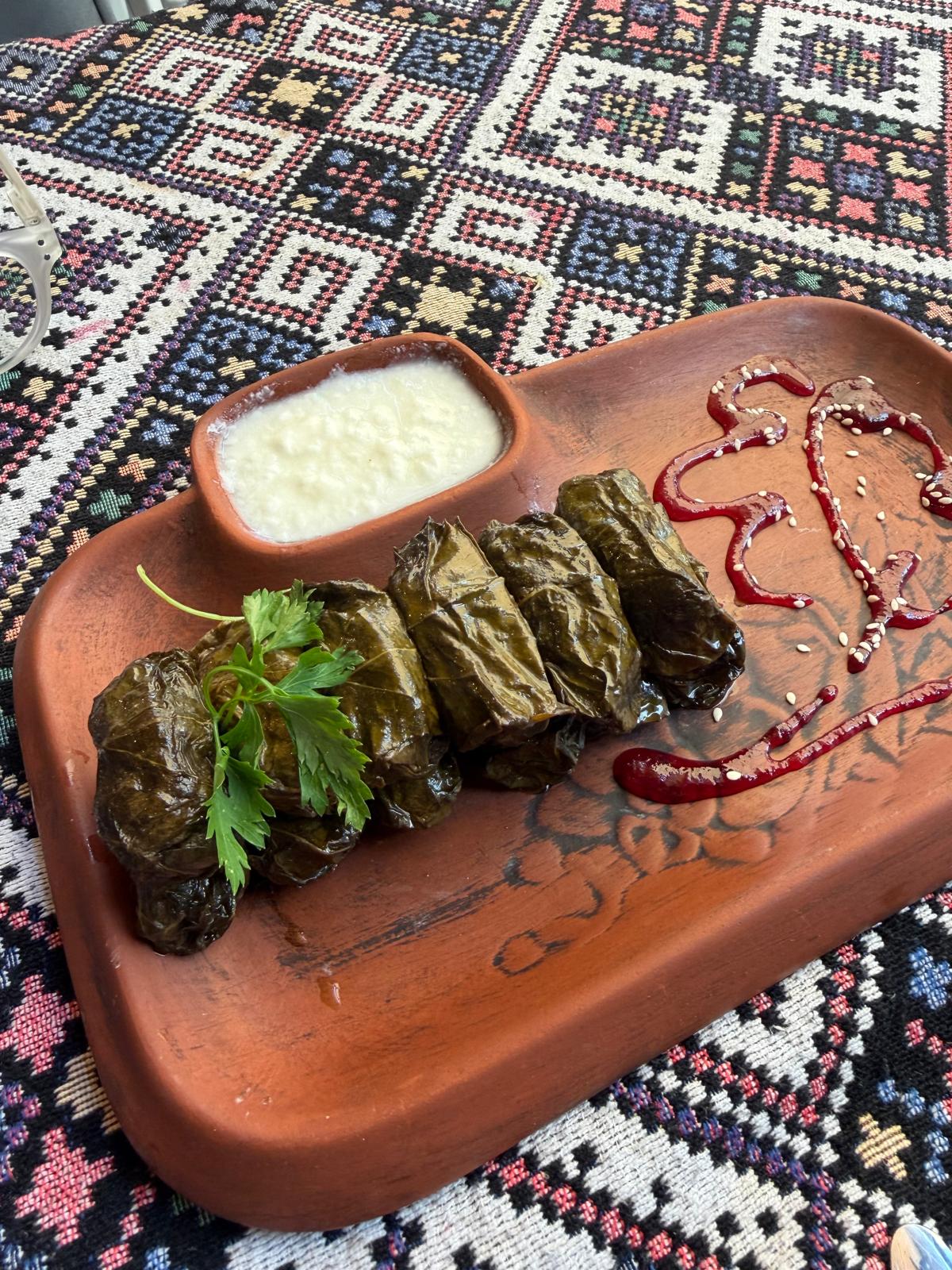
The photo below is the classic version, yarpaq dolması, served in a garden restaurant in the Old City. A row of small vine-leaf parcels sits on a terracotta board with a sprig of parsley, a pot of garlic yogurt alongside and a swirl of dark red cornelian cherry sauce drizzled across the clay. The tablecloth underneath is a woven kilim pattern in red, blue and cream.
What's in it
Yarpaq dolması means "leaf dolma." Young vine leaves are wrapped around minced lamb or beef mixed with rice, onion and fresh herbs, usually mint, dill and coriander, then simmered slowly until the leaves go soft and the filling sets. Azerbaijani dolma is small, often no bigger than a finger, and this meat version comes to the table warm. The cold, rice-only vine leaves sold across Greece and Turkey are a different dish.
The sauces do as much work as the parcels. Garlic yogurt is the standard, thick, sharp and cool against the warm meat. The red one in the photo is cornelian cherry, zoğal in Azerbaijani, a tart little fruit that grows across the Caucasus and is cooked down into a sour sauce. Dip the dolma in the yogurt, then drag it through the red. Tear bread. Repeat.
Other dolmas to try
Kələm dolması uses cabbage leaves in place of vine leaves, often with a sweet and sour edge from dried fruit. It's a winter dish.
Üç bacı, "three sisters," is a plate of stuffed aubergine, tomato and pepper served together, the filling the same in each, the vegetable different.
Dolma at home is a group job. Families gather to roll hundreds at once, which is a large part of why UNESCO listed the tradition and not just the food.
Where to eat it
Inside the walls of Icherisheher, Baku's Old City, several restaurants serve dolma in old courtyards and converted houses, some with live music on the tar, the Azerbaijani long-necked lute. The setting in the photo is a glassed garden conservatory with kilims on the tables, the kind of place you go for a long lunch and stay into the afternoon.
Order dolma as a starter and let the table fill: a plate of fresh herbs, sheep's cheese, tandir bread, pickles. Then plov, if you've still got room. Finish with black tea in a pear-shaped glass, served with jam on the side instead of sugar in the cup.
Portions are generous and lunch is long. Baku eats late in the evening, so a big lunch will carry you through the afternoon.
More on this plate and this restaurant: Dolma With Cornelian Cherry and Yogurt at Old Garden, Baku Old City on Travel Marketing.