Burgos Cathedral: El Cid's Tomb, the Papamoscas and Free Tuesday Mornings
Most people pass through Burgos. Pilgrims on the Camino de Santiago walk through it on the way west, drivers stop for lunch on the road between Madrid and the north coast. Those who stop for the cathedral tend to stay longer than they planned.
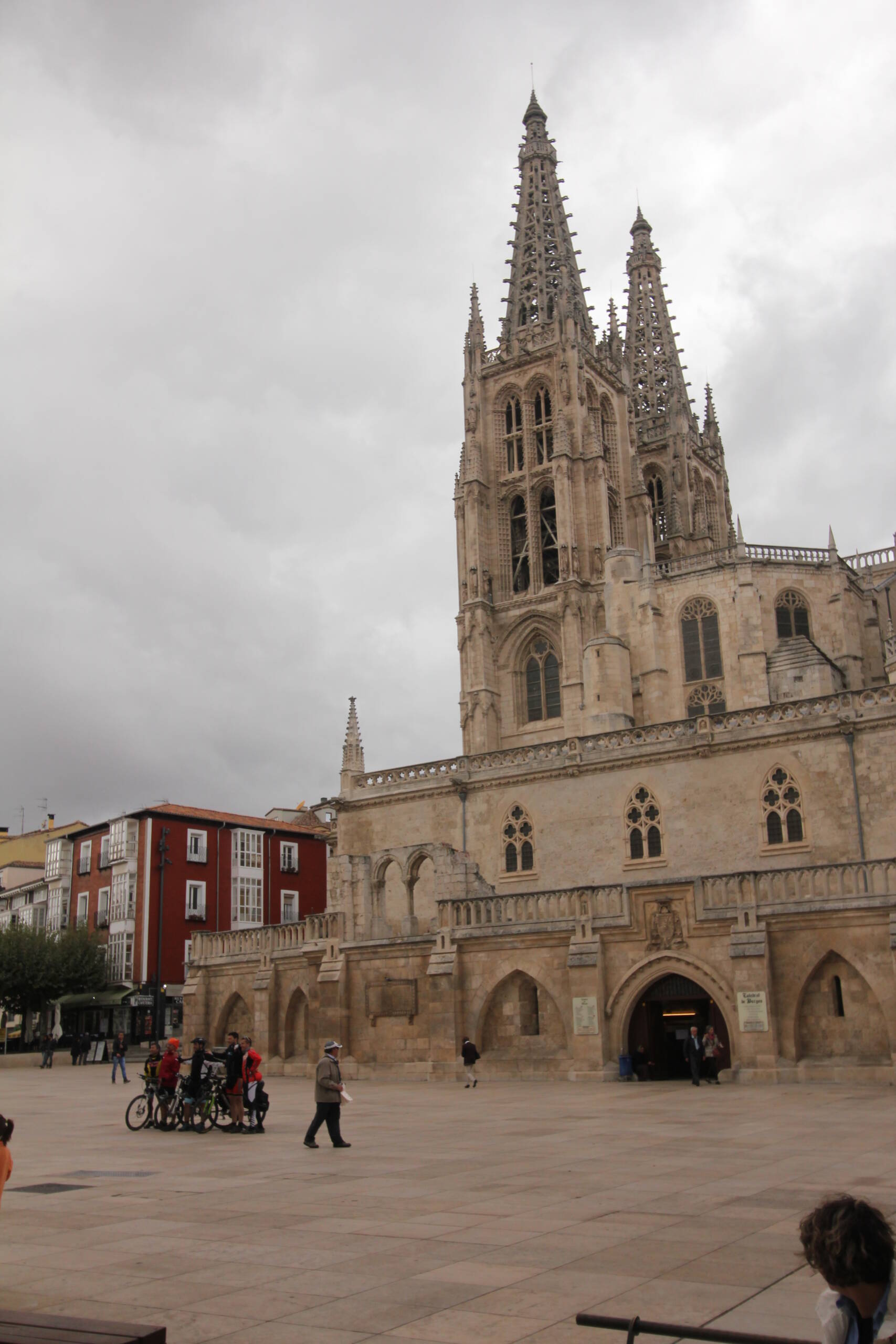
The first stone was laid on 20 July 1221, and the cathedral grew for the next three centuries into one of the finest Gothic buildings in Spain. UNESCO listed it in 1984. The photo below shows its west front on a grey autumn day: two openwork spires like stone lace, a rose window between them, the square in front nearly empty and a row of red and white houses down the side.
What's inside
El Cid. Rodrigo Díaz de Vivar, the 11th-century warlord who became Spain's national hero, is buried under the crossing with his wife Jimena, beneath the great star-shaped lantern. They were moved here in 1921. A plain slab in the floor marks them. The light from the lantern falls straight on it.
The Papamoscas. High on the wall of the nave, an 18th-century figure in a red coat strikes the hours and opens and closes its mouth as it does. The name means "flycatcher," for the mouth. Beside it, a smaller figure called Martinillo strikes the quarters. Be there on the hour and look up. Kids love it. So do most adults.
The Golden Staircase. In the north transept, a double Renaissance stairway by Diego de Siloé climbs to a door that once opened onto the street above, with gilded railings that give it its name.
Then the chapels, many as big as small churches. The most splendid is the Constable's Chapel behind the high altar, its star vault pierced with openwork tracery that lets in the light.
Tickets and free entry
From April 2026 a general ticket costs €11, €10 for over-65s, €3 for ages 8 to 18 and nothing for under-8s.
Entry is free on Tuesday mornings from 9:30 to 11:25. Arrive early. The rest of the week, the cathedral opens 9:30 to 18:30 from mid-March to the end of October and 9:30 to 18:00 in winter. Services close parts of it at times.
Making a day of it
Walk around the outside before you go in. Each façade is different, and the views from the castle hill above the old town show the spires and lanterns sticking up over the roofs. Then cross the river by the Santa María arch, the old city gate, and walk the riverside promenade lined with plane trees.
Burgos is cold. It sits high on the Castilian plateau and the wind cuts through you most of the year. Pack a layer even in September, and finish with something hot: Burgos is known for its morcilla, a rice blood sausage, served in every bar near the cathedral.
More on the cathedral: A Day at Burgos Cathedral and El Cid, Burgos, Spain: The Sword, the Legend, and a Memory on Travel Marketing.