A Smartphone Is All You Need to Start Travel Vlogging Today
For many travel vlogs today, the smartphone already in your pocket is enough to make the whole thing, from the first street scene to the finished film. You can record your arrival, explain what caught your attention and put the clips together on the same device. There is no need to buy a camera before finding out whether you enjoy telling travel stories. Start with one afternoon and somewhere you want to explore.
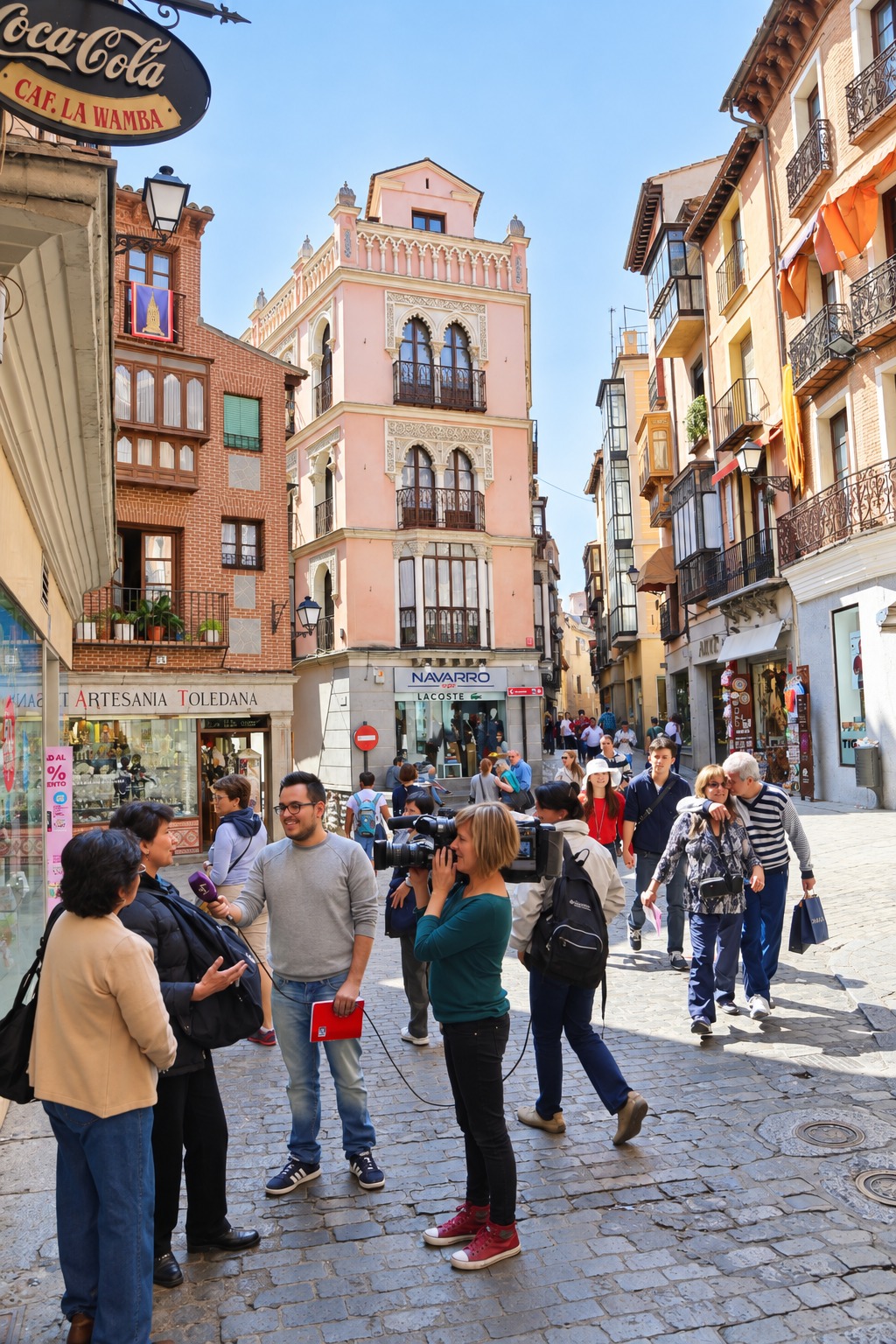
The photograph shows how much equipment a street interview can occupy. A reporter in a grey sweater holds a purple microphone toward two women at the left, while a camera operator in a teal top looks through a substantial video camera. A colleague with a black backpack steps across the cobblestones behind her. Above them, a narrow pink building rises through the centre of the frame, with paired pointed windows, pale ornamental borders and delicate balcony railings. Red brick and enclosed wooden windows fill the left side beneath a hanging Coca-Cola café sign. Across the street, orange awnings glow against cream and yellow walls, iron balconies project over the pavement, and an older couple walks past the filming. The crew is busy making its report while the city carries on around it.
Photograph hosted by MediaGallery.org.
A travel vlogger standing on that street could work with a much smaller footprint. Film a steady view of the pink facade, move closer for the stone decoration, then turn the phone toward yourself and explain what made you stop. Let the footsteps and conversation establish the setting before speaking over everything. You do not need to reproduce the crew's assignment. Your film can follow the experience of discovering the street, including the small interruption that changes where you go next.
Give the outing a manageable subject. Perhaps you are finding somewhere for lunch, following a lane away from a busy square or discovering how a neighbourhood changes after sunset. A sequence with a clear purpose is easier to watch than twenty unrelated landmarks. Record a wide view so viewers understand where they are, then collect the details that matter to your account. Hold each shot long enough to use in an edit. A few quiet seconds can feel surprisingly long when you are standing there with a phone; keep recording a little longer anyway.
Before leaving, wipe the camera lens and check your available storage. Choose horizontal or vertical framing according to where the film will appear, and keep it consistent unless you have a reason to change. Start with ordinary video mode. If your phone offers 4K at 30 frames per second, it is a sensible option for general footage; 1080p is also perfectly usable and takes less space. You can experiment with special modes later. For now, avoid changing settings so often that you miss the scene.
Sound deserves more attention than most new vloggers give it. Step away from traffic before speaking and bring the phone closer rather than trying to narrate from across a square. Listen to a short test recording. In strong wind, a sheltered doorway may help more than another attempt in the same exposed spot. You can also record your observations somewhere quiet afterwards and place that narration over the street footage. An external microphone is an optional improvement when a recurring problem justifies it. It does not have to be your first purchase.
Hold the phone with both hands when possible, stop walking for important shots and turn slowly. In the scene pictured, moving a few steps would change the balance between deep shade and bright walls. Choose a position where your face is evenly lit, and check the screen before delivering a long explanation. At night, look for usable light near a shop window or illuminated square. Leave yourself enough battery for navigation and the journey back, and give the phone a break if it gets hot.
Edit the material while the details are still fresh. Cut repeated views, remove the explanation that never quite reached its point and keep some of the place's own sound. Ask before making a stranger the subject of an interview, and leave room for pedestrians to pass. If you eventually want a dedicated camera, PhotoVideoGear's guide to compact travel reportage kits explores the options. Until then, your phone gives you plenty to work with. Go somewhere, pay attention and bring back a story worth watching.